
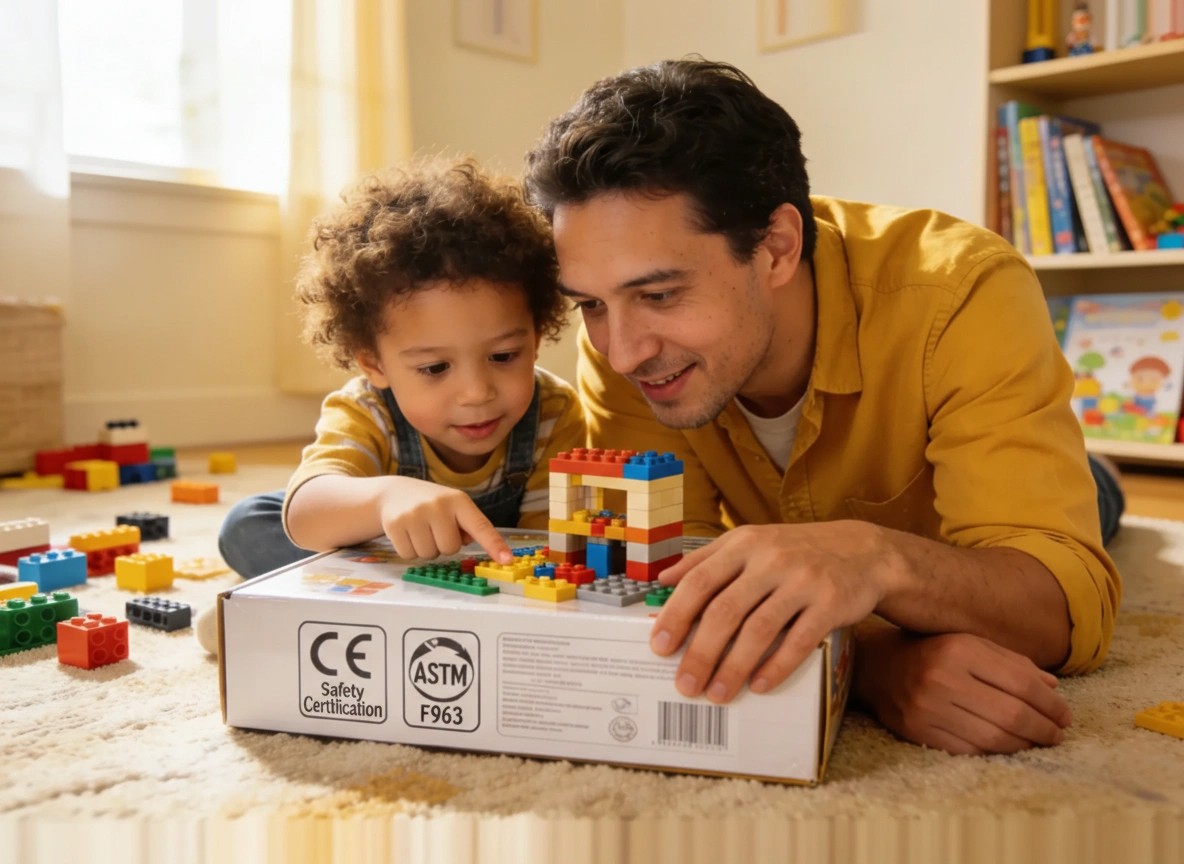
One of the most common questions parents ask me is: "What building activities are right for my child's age?" It's a great question because choosing age-appropriate activities makes the difference between frustration and joyful learning.
Building toys grow with your child, but knowing what to expect—and what to encourage—at each stage maximizes both enjoyment and developmental benefits. This guide breaks down building activities by age, offering specific project ideas and realistic expectations for each developmental stage.
Ages 3-4: Foundation Building
Developmental Stage
At this age, children are developing fine motor control, beginning to understand cause and effect, and learning to follow simple instructions. Their play is exploratory—they're discovering what these toys can do rather than building toward specific goals.
What to Expect
- Building tends to be flat or low to the ground
- Structures are simple and may not resemble real objects
- Frequent destruction and rebuilding (this is learning, not misbehavior!)
- Difficulty sharing building materials
- Attention spans of 10-15 minutes per building session
Activity: Color Sorting Towers
Materials: Magnetic tiles in 3-4 colors
How to Play: Ask your child to build separate towers using only one color for each tower. This reinforces color recognition while practicing stacking skills.
Skills Developed: Color recognition, sorting, hand-eye coordination, counting
Activity: Simple Pattern Making
Materials: Building blocks in 2 colors or shapes
How to Play: Create a simple AB pattern (red-blue-red-blue) and help your child continue it. Start with just 4-6 pieces.
Skills Developed: Pattern recognition, sequencing, prediction
Ages 5-6: Intentional Construction
Developmental Stage
Children at this age begin building with purpose. They envision what they want to create and work toward that goal, though the final product may differ from their initial plan. This is when representational play becomes prominent—their structures represent houses, vehicles, or familiar objects.
What to Expect
- Building upward and outward, creating 3D structures
- Storytelling integrated with building (the structure becomes part of imaginative play)
- Beginning to follow simple pictorial instructions
- Frustration when structures don't match their mental image
- Attention spans of 20-30 minutes for engaging projects
Activity: Magnetic Tile Houses
Materials: Magnetic tiles including squares and triangles
How to Play: Challenge your child to build a house with four walls and a roof. Discuss what makes a structure stable. Let them discover that triangular roofs are easier than flat ones.
Skills Developed: Spatial reasoning, problem-solving, understanding of stability
Activity: Build and Measure
Materials: Building blocks, ruler or measuring tape
How to Play: Build towers and measure them. Keep a chart of "tallest tower" records. This introduces measurement concepts naturally.
Skills Developed: Measurement, number sense, comparative thinking (taller/shorter)
Ages 7-8: Complex Creations
Developmental Stage
This age marks a shift toward more sophisticated planning and execution. Children can now hold detailed mental images while building, follow multi-step instructions, and incorporate symmetry and patterns into their designs. They're also becoming more collaborative, enjoying group building projects.
What to Expect
- Detailed, multi-component structures
- Ability to follow instruction manuals independently
- Interest in building specific objects (vehicles, buildings, scenes)
- Preference for extended building sessions (30-60 minutes)
- Desire to display finished work rather than immediately destroying it
Activity: Symmetrical Structures
Materials: LEGO-compatible blocks or magnetic tiles
How to Play: Challenge your child to create a perfectly symmetrical structure. Use a mirror to check their work. Start simple (one plane of symmetry) and progress to radial symmetry.
Skills Developed: Symmetry recognition, spatial planning, attention to detail
Activity: Marble Run Engineering
Materials: Magnetic tiles with marble run accessories
How to Play: Design a marble run where the marble must make three complete turns before reaching the bottom. Test and redesign as needed.
Skills Developed: Engineering design process, gravity and motion concepts, persistence
Ages 9-10: Detailed Design and Planning
Developmental Stage
Fourth and fifth graders approach building with intention and planning. They often sketch designs before building, consider functionality alongside aesthetics, and show interest in real-world architecture and engineering. This is an excellent age for introducing more complex themed sets and building challenges.
What to Expect
- Planning and sketching before building
- Interest in how things work (mechanical functions)
- Combining different types of building toys creatively
- Extended projects over multiple sessions
- Pride in displaying and photographing creations
Activity: Blueprint Building
Materials: Graph paper, building blocks of choice
How to Play: Have your child draw detailed blueprints (top view and side view) before building. Then construct according to the plans. This mirrors real architectural process.
Skills Developed: Planning, technical drawing, translating 2D to 3D
Activity: Bridge Building Challenge
Materials: Building blocks, two chairs, small weights for testing
How to Play: Build a bridge that spans between two chairs and can support increasingly heavy loads. Research bridge types (suspension, arch, beam) for inspiration.
Skills Developed: Engineering principles, research skills, structural understanding
Ages 11-12: Advanced Concepts and Collaboration
Developmental Stage
Preteens can handle complex, multi-day projects and enjoy working within constraints (budget limits, specific piece counts, or thematic requirements). They're capable of following detailed instructions but also increasingly interested in free building and original design. Many at this age enjoy teaching younger siblings or friends what they've learned.
What to Expect
- Sophisticated original designs
- Interest in moving parts and functional mechanisms
- Ability to work from photographs of real structures
- Enjoyment of building challenges with specific parameters
- Preference for collaborative projects with friends
Activity: City Planning Project
Materials: Multiple building sets, large building surface
How to Play: Create an entire cityscape over several days or weeks. Include residential, commercial, and recreational zones. This can be a solo project or involve siblings/friends, with each person responsible for different districts.
Skills Developed: Urban planning concepts, collaboration, sustained project management
Activity: Reverse Engineering
Materials: Photo of a complex building or structure, appropriate building materials
How to Play: Choose a famous building (Eiffel Tower, Sydney Opera House, etc.) and attempt to recreate it from photos without instructions. This requires analyzing the structure, estimating proportions, and problem-solving throughout.
Skills Developed: Analysis, proportion, persistence, creative problem-solving
Supporting Your Builder at Every Age
Regardless of your child's age, certain principles support optimal building play:
Create a Dedicated Building Space
If possible, designate an area where structures can remain assembled for several days. Having to dismantle creations immediately limits what children will attempt. A folding table that can be tucked away works well for small spaces.
Provide Adequate Materials
Nothing frustrates a builder more than running out of pieces mid-project. While you don't need thousands of pieces, having enough to complete medium-sized projects (100+ piece sets for younger children, 500+ for older ones) makes a difference.
Mix It Up
Combining magnetic tiles with traditional blocks or LEGO creates new possibilities. Don't feel obligated to keep different building systems separate—mixing them often leads to the most creative designs.
Document Their Work
Take photos before disassembly. Create a digital album or print favorites for a physical portfolio. This validates their efforts and allows them to see their progress over time. Many children enjoy looking back at what they built months or years ago.
Know When to Step Back
Adult participation can enhance building play, but it can also dominate it. Watch for signs that your child wants to lead. If they're fully engaged and problem-solving independently, your best role might be appreciative observer rather than active participant.
The Gift That Grows
Quality building toys are one of the few purchases that genuinely last from toddlerhood through middle school. A set of magnetic tiles or building blocks bought for a three-year-old will still engage that same child at ten—just in entirely different ways.
By understanding what's developmentally appropriate at each stage, you can support and challenge your child without creating frustration. The sweet spot of learning happens when activities are neither too easy nor too difficult—just challenging enough to be engaging.
Most importantly, building play should be fun. When we focus too heavily on educational outcomes, we risk transforming play into work. Trust that the learning happens naturally when children are engaged, curious, and creating. Your job isn't to force learning—it's to provide the materials, time, and space for it to unfold organically.